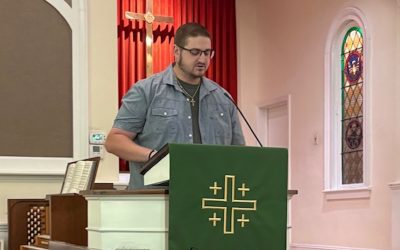
Matthias Beier is now an Indianapolis Star contributing columnist following his part in an award-winning series
September 2026 – Drew Theological School alum Matthias Beier T’97,’02 has seen his public voice grow as an expert on religion, culture, and politics, with a particular focus on Christian nationalism.
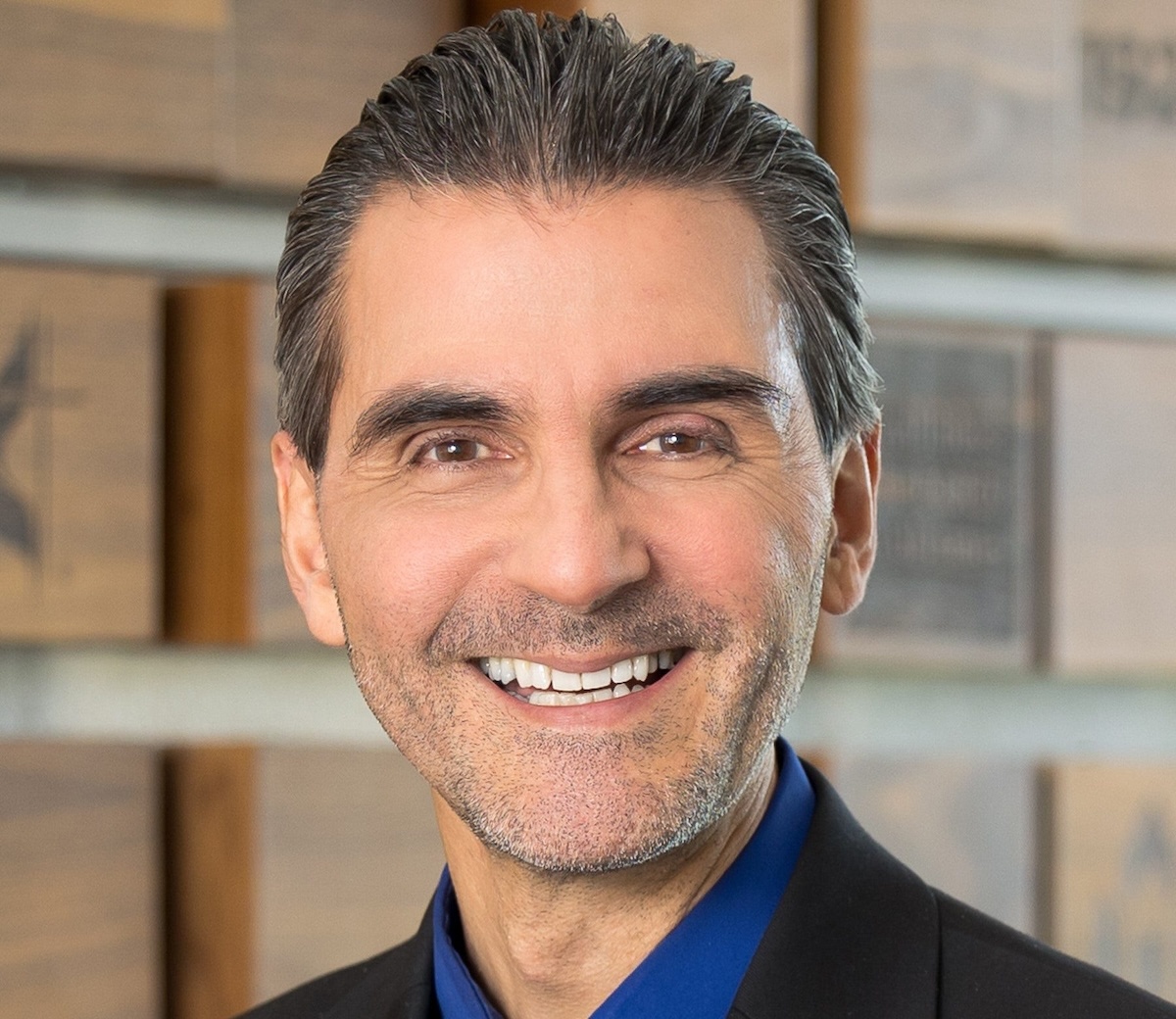
Beier, who received both a master’s and PhD in Religion and Society, with a specialization in psychology and religion, currently serves as an associate professor of clinical mental health counseling and pastoral theology at the Christian Theological Seminary.
In November 2025, Beier contributed to the Indianapolis Star’s series on the prominence of Christian nationalism in Indiana politics. Most prominent was his debate with the Indiana Lt. Governor Micah Beckwith on the topic.
“I was particularly alarmed by his claim that God told him the January 6 Capitol riot was God’s ‘hand at work,’” said Beier. “To me, that illustrated the danger of a politician turning his own convictions into the voice of God. The debate experience was quite revealing. While Beckwith and I often used the same christian vocabulary, we understood its purpose very differently. He explicitly invoked a violent God to authorize power, while I challenged it based on the analysis in my book A Violent God-Image, which had grown out of my Drew PhD thesis.”
In April 2026, the series earned first place in the Religion News Association’s Excellence in Religion Reporting Contest for Division 2: Local, Regional, and Metro outlets.
Since then, Beier has been welcomed as a contributing columnist for the paper, which will allow Beier to pen biweekly columns focused on religion and social issues. He also remains a frequent expert and has been interviewed for more than 15 recent articles.
“I uniquely look at how fear distorts religion and makes it usable for cultural oppression and exploitation,” said Beier. “Christian nationalism is a glaring example of how fear can distort faith into domination, scapegoating, and political certainty. Politicians and religious leaders in this movement tap into deep psychological and existential anxieties of people and then idolatrously pose in God-like fashion as saviors. My perspective on this is also uniquely shaped by growing up in postwar Germany with an education that included an understanding of how ideas of Christian obedience and sacrifice had been used in Nazi Germany to produce the kind of follow mentality that made the inhuman crimes of the regime possible.”
Beier came to Drew Theological School with a United Methodist background and “found it remarkably welcoming to diverse voices.”
“Drew’s PhD in Religion and Society offered me groundbreaking social-scientific tools for analyzing how religion can be culturally used in either healthy or harmful ways,” said Beier. “The Psychology and Religion specialization of the program gave me something especially important: the opportunity to apply a therapeutic framework not only to personal life but also to political and social life. That approach still defines much of my work today, including in my professorial position.”
As his public voice grows, Beier brings lessons from Drew with him to inform his work and perspective.
“Drew taught me, in a sense, to put religion and society on the couch: to ask what fears lie beneath the misuse of religion in politics and to point out ways in which this can be countered through the cultivation of a form of trust that allows for false sacred masks of the Empire, both in external social structures and in the internalized form in people’s psyche, to fall and for a shared humanity in harmony with the earth to grow.”