Students assist in gaining official recognition by New Jersey Black Heritage Trail
October 2026 – Drew University’s Center on Religion, Culture and Conflict (CRCC) joined hands with Hidden Figures of Madison in celebrating the unveiling of a New Jersey Black Heritage Trail plaque commemorating the 1964 Madison Barbershop Protests.
Enlarge
The protests outside segregated barbershops in Madison were strongly influenced by the February 5, 1964, visit to Drew’s campus by the Rev. Dr. Martin Luther King, Jr., in which the Civil Rights leader called for racial justice and nonviolent resistance in his famed “American Dream” speech to more than 5,000 attendees in Baldwin Gymnasium.
Dr. King’s visit was facilitated by Dr. George D. Kelsey, professor of Christian ethics at Drew, a former mentor to King during his time at Morehouse College. Kelsey was credited in playing a pivotal role in influencing King’s decision to dedicate his life to ministry and social justice.
Several months following King’s speech, Drew students and faculty took a stand against racial discrimination in Madison, joining the Civil Rights Movement through peaceful protest and picketing at local barbershops.
A day of commemoration on Drew’s campus and in downtown Madison began in Seminary Hall’s Craig Chapel with a commemorative service featuring music by Professor of Church Music Mark Miller and narrative by Dr. Arthur Jones C’67, one of three Drew students arrested for participating in the 1964 protests.
This was followed by a viewing of Drew Archives materials related to the protests. The items included community letters to former Drew President Robert F. Oxnam, who encouraged Drew’s hosting Dr. King and supported student activism; photos of the protests and Dr. King’s campus speech; clippings from national, local, and Drew student newspaper coverage of the events.
Hosted in Seminary Hall’s Craig Chapel, Drew’s Director of the CRCC, Professor of Teaching, and Convener of the Conflict Resolution and Leadership certificate program Jonathan Golden began a symposium on the protests by outlining the nomination process for having the protests officially recognized by the New Jersey Black Heritage Trail.
“This was and is one of Drew University’s proudest moments,” said Golden.
He further noted that students in his community-based learning course were directly engaged in the efforts to have the protests memorialized.
“It illustrates the power of learning outside the classroom. These students will be able to return to Drew and Madison with their kids and grandkids and point to this plaque and tell them, ‘I did that while I was a student at Drew University,’” Golden said to applause.
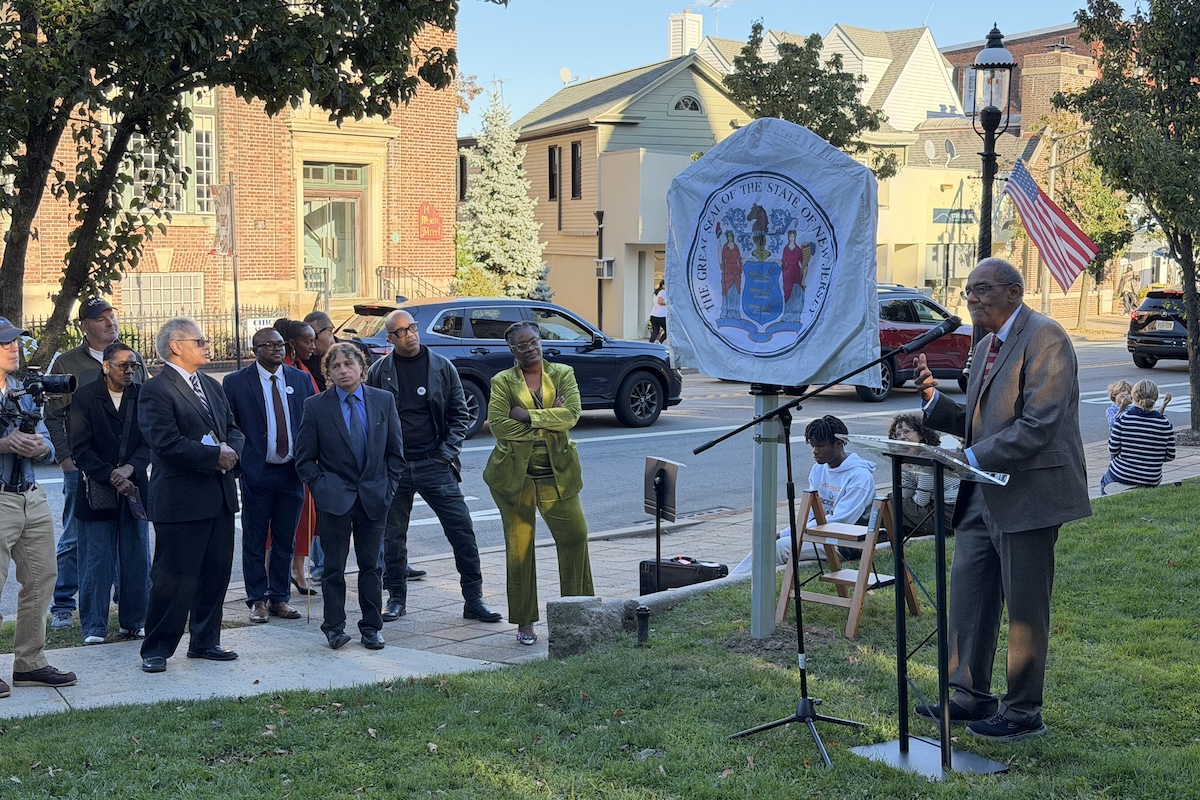
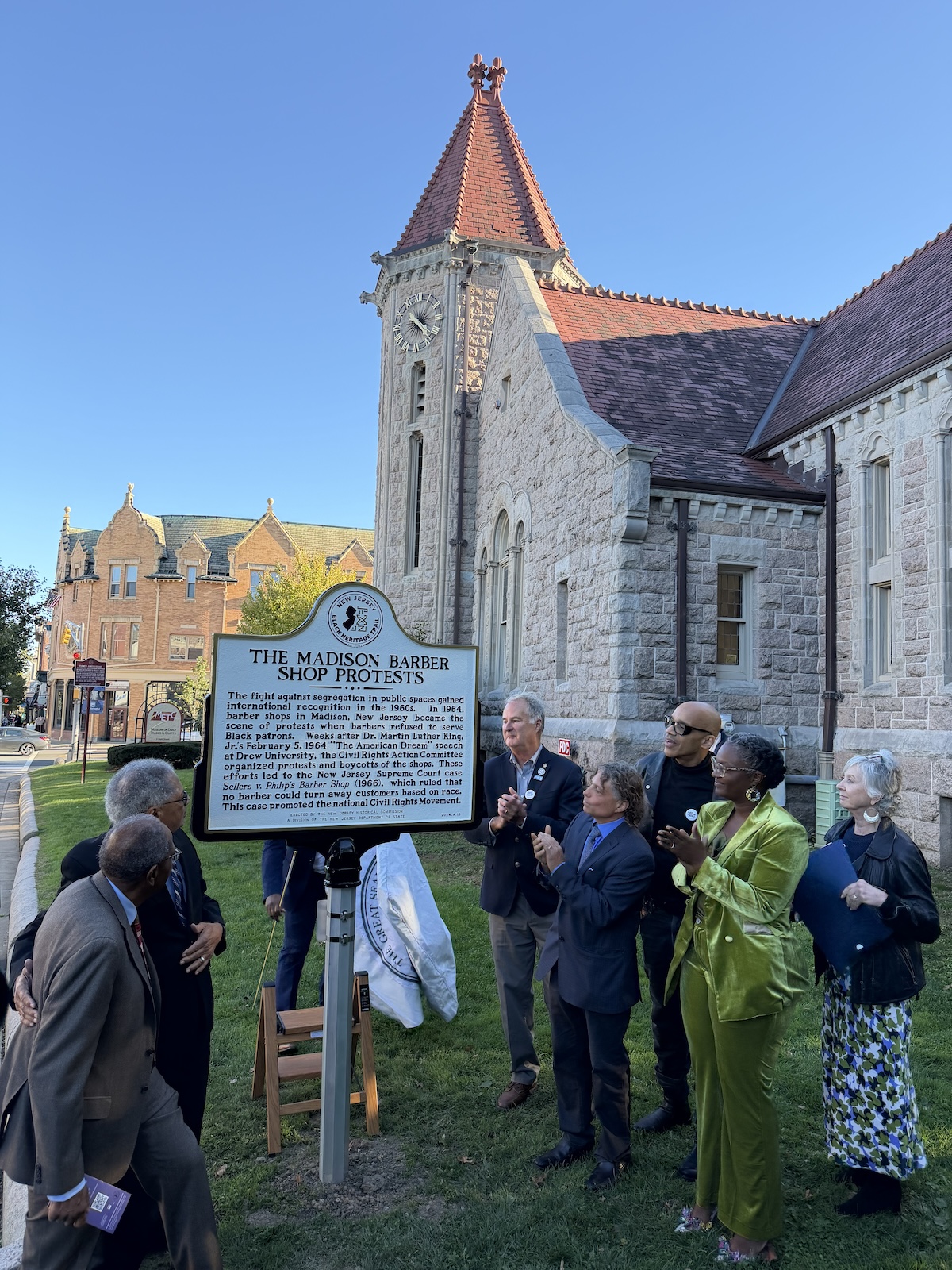
The plaque unveiling ceremony was held on the grounds of the Museum of Early Trades and Crafts (METC), mere blocks from Drew’s campus, and close to where the protest took place.
Speakers stood next to the plaque, covered with the seal of the state of New Jersey. They included Golden; Kenisha Tucker, founder of Hidden Figures of Madison; Robert Conley, mayor of Madison; Deborah Farrar Starker, director of the METC; Everett Kelsey, grandson of Dr. George Kelsey; Thomas Sellers III, son of Thomas P. Sellers II; and Noelle Lorraine Williams, African American History Program and Black Heritage Trail Director.
“They didn’t protest because they didn’t have a place to get their hair cut, but because of what segregation represented as a whole,” reflected Williams.
The speakers and additional representatives crowded around the plaque covered in the official seal of New Jersey, unveiling what will now be a cornerstone at the entry into downtown Madison along Main Street.
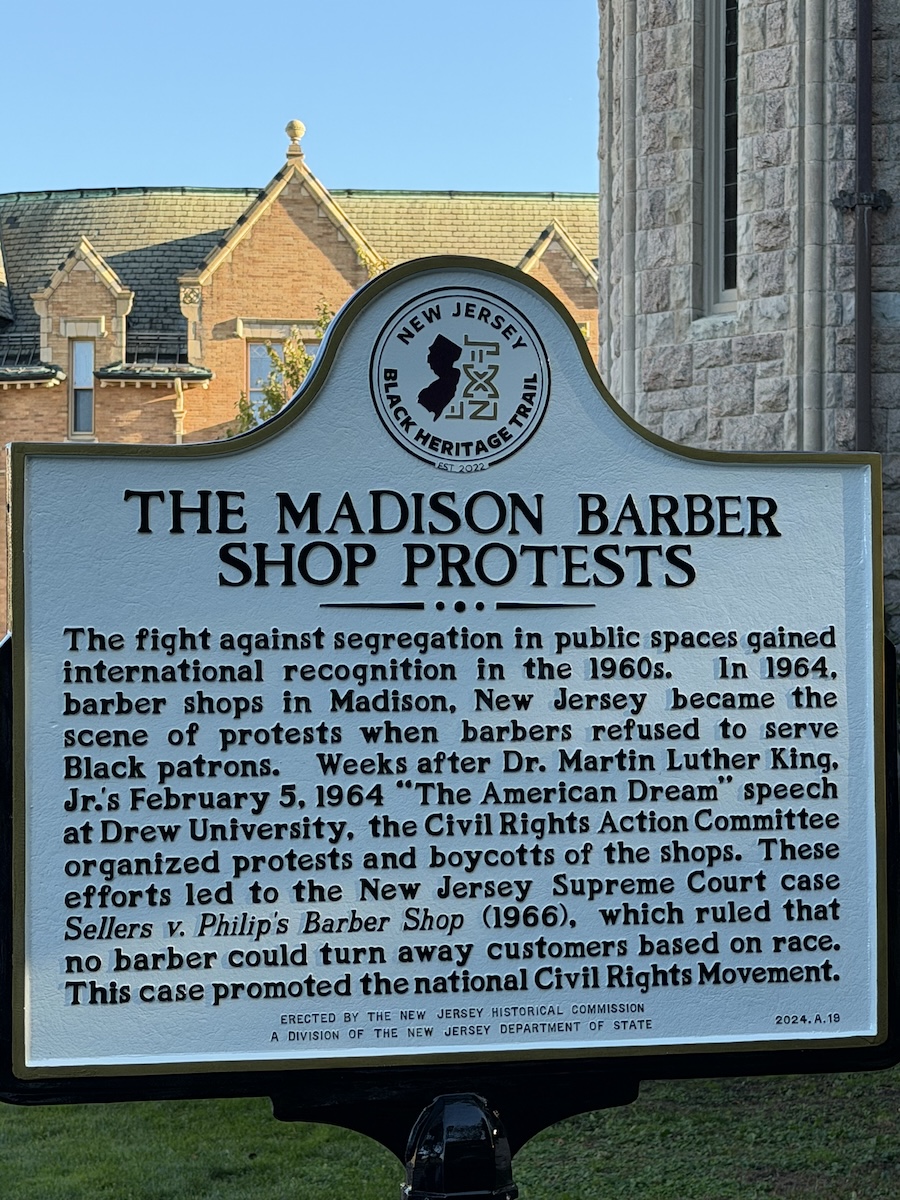
The plaque reads as follows:
The Madison Barber Shop Protests
The fight against segregation in public spaces gained international recognition in the 1960s. In 1964, barber shops in Madison, New Jersey became the scene of protests when barbers refused to serve Black patrons. Weeks after Dr. Martin Luther King, Jr.’s February 5, 1964 “The American Dream” speech at Drew University, the Civil Rights Action Committee organized protests and boycotts of the shops. These efforts led to the New Jersey Supreme Court case Sellers v. Philip’s Barber Shop (1966), which ruled that no barber could turn away customers based on race. This case promoted the national Civil Rights Movement.