Fifty-five collaborators answered, and a Drew project was born
August 2026 – A social worker sits with someone to talk about an incident. Afterward, the file holds what the format allows—a few lines or paragraphs, data centric and technically accurate. But ask the social worker what happened in the incident and what it felt like, and they will likely go beyond those lines. And for the better part of their explanation, they may run out of words. Not because language fails them, but because language fails the thing itself.
This situation could just as easily be a teacher taking notes on a student after a parent conference, a curator considering an exhibition as it closes, a lawyer leaving an intake, or a hospice nurse at a bedside. The form differs, but the gap is the same.
Enlarge
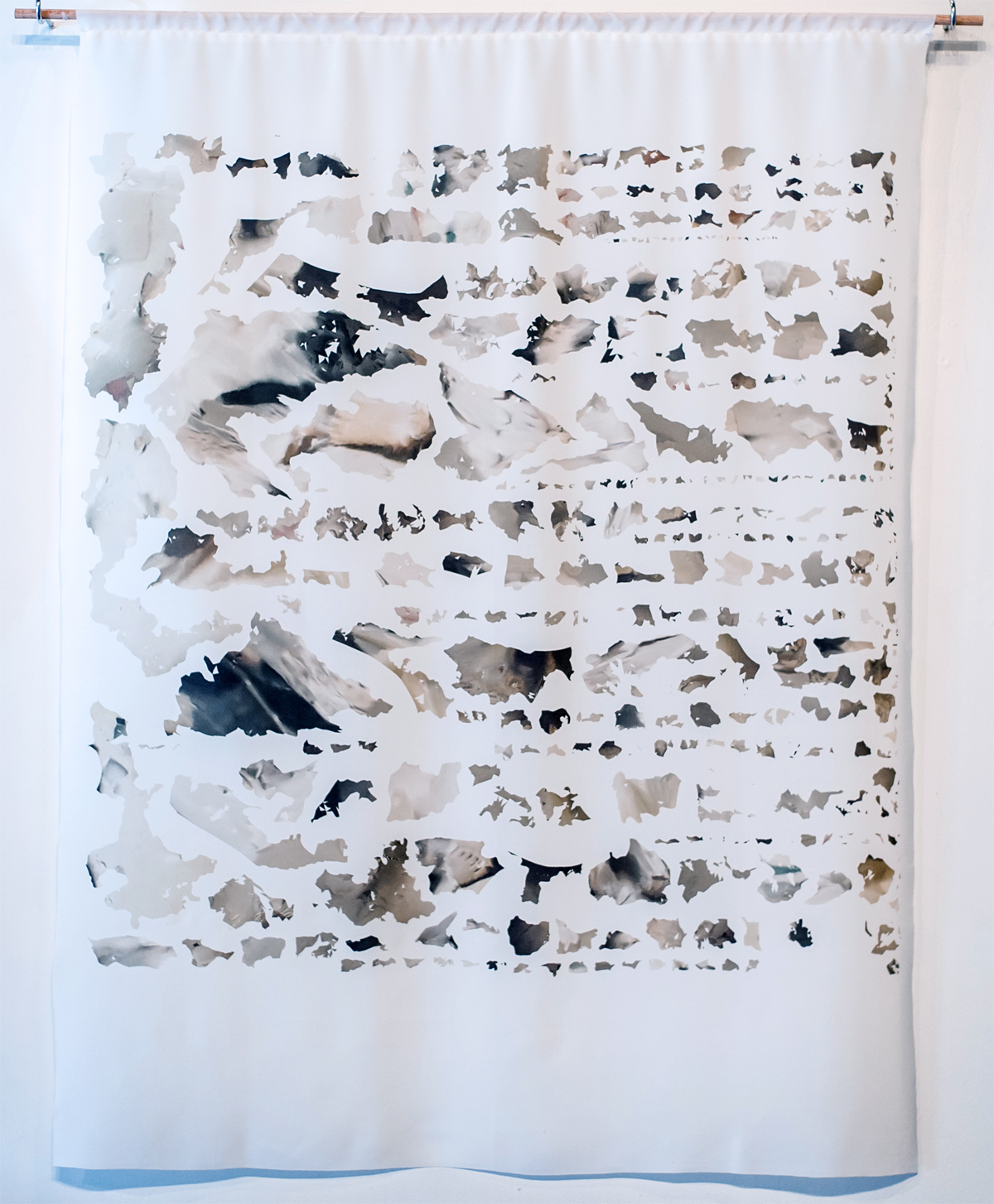
Drew University professors Merel Visse and Ryan Woodring are exploring what becomes of these human experiences that escape language and data points.
It is a particularly timely question in the wake of rapid technological expansion, which has deemed that what can be named, sorted, and counted often comes to stand for what counts and what is real. When society codifies what counts as knowable, it also settles who gets to make a claim at all.
Visse and Woodring are looking into how to account for things like attentiveness, doubt, trust, grief, intuition, and imagination that cannot always be captured or quantified, and thus are increasingly at risk of being lost.
Drawing on Visse’s decades of research into unsayable experiences and Woodring’s post-digital art practice on undiagnosed illness, the Drew duo, together with international partners, started an interdisciplinary project emphasizing connection with the ineffable in situations where it is at particular risk of being cast aside.
At the heart of this project is the word apophasis—a knowing by unknowing. Almost un-saying. It says not this, not that, not the thing you just reached for. It is intentionally approaching that which cannot be said through negation, silence, withholding, indirection, and more.
For example, someone orders a coffee without milk. The waiter apologises. “There’s no milk. Would coffee without cream be all right?” This joke shows apophasis in a nutshell. The two absences—milk and cream—are not the same. We can feel the difference, but it’s hard to explain. What is missing shapes what you get. It has content.
Visse and Woodring put out a call for collaborators to join their initiative. Fifty-five artists, writers, researchers, professionals, and others from all over the world answered.
A group having formed, the goal is now to work with the ineffable as something practiced, not apologized for or, worse, discounted, ignored, or forgotten.
The group has publications in development and an exhibition at Drew’s Korn Gallery scheduled for October 2026.
Visse and Woodring are also hosting an intensive course at Drew August 29-30 open to traditional and nontraditional students. Enrolled already are artists, researchers, chaplains, poets, biologists, hospice nurses, historians, teachers, and professors.
The intensive emphasizes process over results, using apophatic strategies to call forth the unknown aspects of its participants’ research. Gitanjali Chhabra’s poetic inquiry, for instance, uses subtraction, silence, and incompleteness to attend to what cannot be fully said in public commentaries addressing higher education issues. Guest facilitators include William Franke, Kythe Heller, Béatrice Machet, John F. Simon Jr., and Ruby J. Thelot.
“We’re interested in the work before the meaning,” said Visse. “We stay close to participants’ projects as they form and mature, while there is still room for nuance. Curious what they’re turning into, staying receptive for as long as we can. Much of what happens at the intensive will be recognizing a practice we already have, giving it a lineage, and finding our way back into it.”
In addition to the two-day course, the program will offer optional weekly calls over Zoom with mentors for those who want to continue learning about apophasis in their practice in community.
“Long is the time to come to a lived understanding of what is going on,” said Visse. “Insight of this kind doesn’t arrive on a schedule. It usually comes sideways. You’re doing something else. Then you notice it.”