a
M

CAPS offers free, non-judgemental, and confidential assistance with addressing substance use. Whether looking to abstain or just looking for education and ways to change smaller behaviors, we are here to help. Feel free to contact the Counseling Center ([email protected] or 973-408-3398) if you are concerned about your substance use, as well as if you are concerned about a friend/loved one’s use.

Below, find a number of resources for those looking to begin addressing their substance use.

Substance Abuse Self-Assessments

Alcohol Self-Assessment

This interactive tool from the CDC helps you see how much you’re drinking, identify your motivation to change, set new goals, and provides tips for how to achieve them. This will only take 5-10 minutes to complete. This is for adults 18 and older and is NOT for medical diagnosis. If you are concerned about your substance use, please feel free to reach out to the Counseling center for an appointment. 

https://www.cdc.gov/alcohol/checkyourdrinking/index.html

Developed by the World Health Organization (WHO), The Alcohol Use Disorders Identification Test (AUDIT) is a 10 question self assessment that takes a look at drinking behaviors to assess risk of alcohol dependence. Answers to the questions should be done in terms of standard drinks, refer to picture below before starting the assessment.
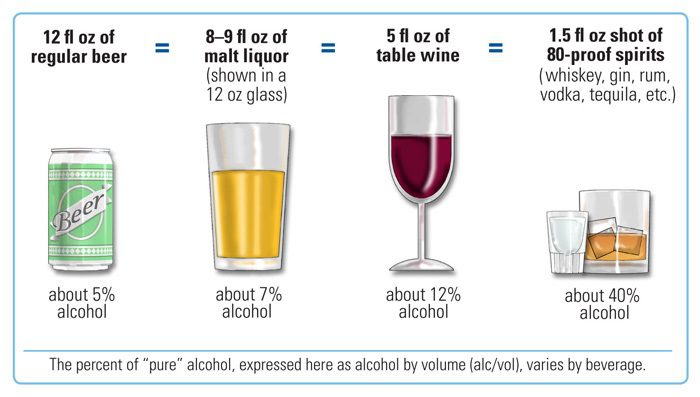
https://auditscreen.org/check-your-drinking/

Cannabis Self-Assessment

The CUDIT-R is a tool that helps you identify and reflect on your current cannabis use patterns. Questions 1-7 are scored on a 0-4 scale. Question 8 is scored 0, 2 or 4.  If you are concerned about your substance use, please feel free to reach out to the Counseling center for an appointment. 

https://adai.uw.edu/instruments/pdf/Cannabis%20Use%20Disorders%20Identification%20Test%20Revised%2059.pdf

Recovery Support Groups and Hotlines

There are a wide range of treatment options for those struggling with substance use, one of which being support groups. There are many different types, so please take the time to identify which would work best for you! Here are a few options to get started:

12-Step Groups

12-Step groups are likely the most well-known recovery group for those struggling with addiction because they are widely available and have groups for a wide array of both substance and behavioral addictions. They also have many subgroups for meetings including those for specific genders, young adults, and the LGBTQ community. Examples include Alcoholics Anonymous, Narcotics Anonymous, Marijuana Anonymous, and Al-Anon (a support group for loved ones of someone with addiction). 12-Step groups follow “12 Steps” that focus on admitting powerlessness over the substance/behavior and finding a ‘higher power’. It is important to note that while there are references to God in the 12 steps, a higher power can be any of your understanding and does not have to have religious ties. Follow the hyperlinks to gain more information about these groups and find in person/online meetings.

SMART Recovery

For those who want a recovery program that is not rooted in spirituality, SMART Recovery is a great option. This stands for Self-Management and Recovery Training, and the focus of this group is identifying and changing thought patterns that contribute to addictive behavior. You will work on identifying triggers and making decisions that align with your new goals and values. Follow the hyperlink to gain more information about this group and find in person/online meetings.

Recovery Dharma

Recovery Dharma is a peer-led recovery group rooted in Buddhism. They focus on relationships and community as a way to recover from addiction. Follow the hyperlink to gain more information about this group and find in person/online meetings.

Refuge Recovery

Refuge Recovery is also inspired by Buddhism. They describe this group as,”…a practice, a process, a set of tools, a treatment, and a path to healing addiction and the suffering caused by addiction.” Follow the hyperlink to gain more information about this group and find in person/online meetings.

Students Recover

This online group is specifically for those enrolled in higher education institutions to find support. You can go to studentsrecover.org for more information and can sign up to join the community at this link.

Hotlines
  • Addictions Hotline of NJ: 800-238-2333
  • IME Addictions Access Center: 1-844-276-2777
  • NJ Quitline for Smoking Cessation: 1-866-657-8677
  • NJ Gambling Addiction Hotline: 1-800-426-2537

Good Samaritan Policy & Drew University AOD Policy

Review Drew’ medical amnesty policy and AOD policy at this link: https://uknow.drew.edu/confluence/pages/viewpage.action?pageId=52729212

Tips for Safer Substance Use

Looking for ways to use substances in a safer way? Look at this post on our instagram and follow us for more educational info @drewcounseling.

Need a T-Break? Check out this 21-day guide made by a member of the University of Vermont community.

Bystander v. Upstander

BE AN UPSTANDER (STAND UP!) NOT A BYSTANDER…

As members of the Drew Community, we all share the responsibility to create a climate of respect – for each other and ourselves. We can often intervene in situations where someone’s safety is being threatened by their own or someone else’s behavior. You have many opportunities for intervention before a situation progresses and becomes a crisis. We can all do our part to prevent racism, sexism, heterosexism, interpersonal violence, bullying, sexual assault, alcohol or drug poisoning.

FACTORS THAT INFLUENCE INTERVENTION

  • Diffusion of responsibility (“Lots of people are around. Someone else will probably do something about it.”)
  • It’s unclear that there is an emergency
  • Perceived personal cost is too high
  • The perception that the prospective victim is inviting danger by being drunk, dressing provocatively, etc.
  • Similarities between the bystander and the potential offender (Someone who shares a lot in common with a potential offender will be less likely to act against them)
  • Apathetic mood
  • The bystander’s gender may influence their perception of whether it’s appropriate to get involved
  • Social norms (Intervening is easier when peers are nearby to approve of your actions)

ABCS OF INTERVENTION

  • ASSESS Safety and Risk – nonverbal and non-verbal cues will help you determine whether there is a problem or risky situation. E.g. if you observe someone too intoxicated to protect themselves from being taken advantage of; or if someone seems to be overpowered by another, being cut off, looking cornered; determine if there seems to be a risk of physical violence.
  • BRING in reinforcements – you don’t have to act alone. Ask friends to accompany you to intervene. Contact an CA or CRE. Call Public Safety’s 24-hour emergency number: 973-408-3379.
  • CARE for the person at risk or victim; Don’t leave someone at risk alone, get them to a safe place. If the person has been victimized help them find resources/options. Be a listening ear. Listen to their fears and concerns for safety. Pay attention to cries for help and take action. While caring for others, remember to care for yourself. Don’t try to do everything yourself, get your friend to use professional help. You can bring them to the Center for Counseling and Psychological Services or come in yourself to talk. Counseling is confidential!
  • CONFRONT the potential perpetrator if you deem it safe. Challenge sexist, homophobic, racist, or disrespectful language. Don’ t let someone take a person away when they appear unable to consent to leave because of force, intoxication, or pressure. Don’t do this alone if you don’t feel safe! Don’t argue with drunk people.

STRATEGIES WHEN FACED WITH POSSIBLE SEXUAL ASSAULT

  • CHALLENGE the potential assailant before the assault happens.
  • DISTRACT either party by focusing their attention on something else.
  • SEPARATE the potential victim from the potential attacker.
  • DELEGATE to someone in a better position to help.

DIRECT OR INDIRECT INTERVENTIONS

  • Direct Actions: Point out someone’s disrespectful behavior in a manner that will help de-escalate the situation, pull a friend aside and talk to them alone to ensure he/she is okay, call the police
  • Indirect Action: Recommend to a bartender or party host that someone has had too much to drink, make up an excuse to help someone get away from a potential offender, and call the local authorities

Know your options. Once you’ve decided whether you want to handle the situation directly or indirectly (or a little of both), think of all the possible options for doing so. For instance, if you’ve decided to speak directly to the person displaying problematic behavior, do you want to do it right there in the moment, or take them aside later? If you want to deal with it indirectly, what resources can you access to help you handle the problem?

COURAGE?

It takes courage to challenge negative behavior. If you think it is too uncomfortable to intervene in a dangerous situation, remember: Not intervening does the offender a favor.