Providing more accessibility to the coveted collection
September 2025 – This summer, Drew University’s Special Collections and University Archives undertook a major project to digitize the extensive Willa Cather Collection, allowing more accessibility to scholars, students, and the public.
Enlarge
Willa Sibert Cather (1873-1947) was an American writer known for her novels of life on the Great Plains, including O Pioneers!, The Song of the Lark, and My Ántonia.
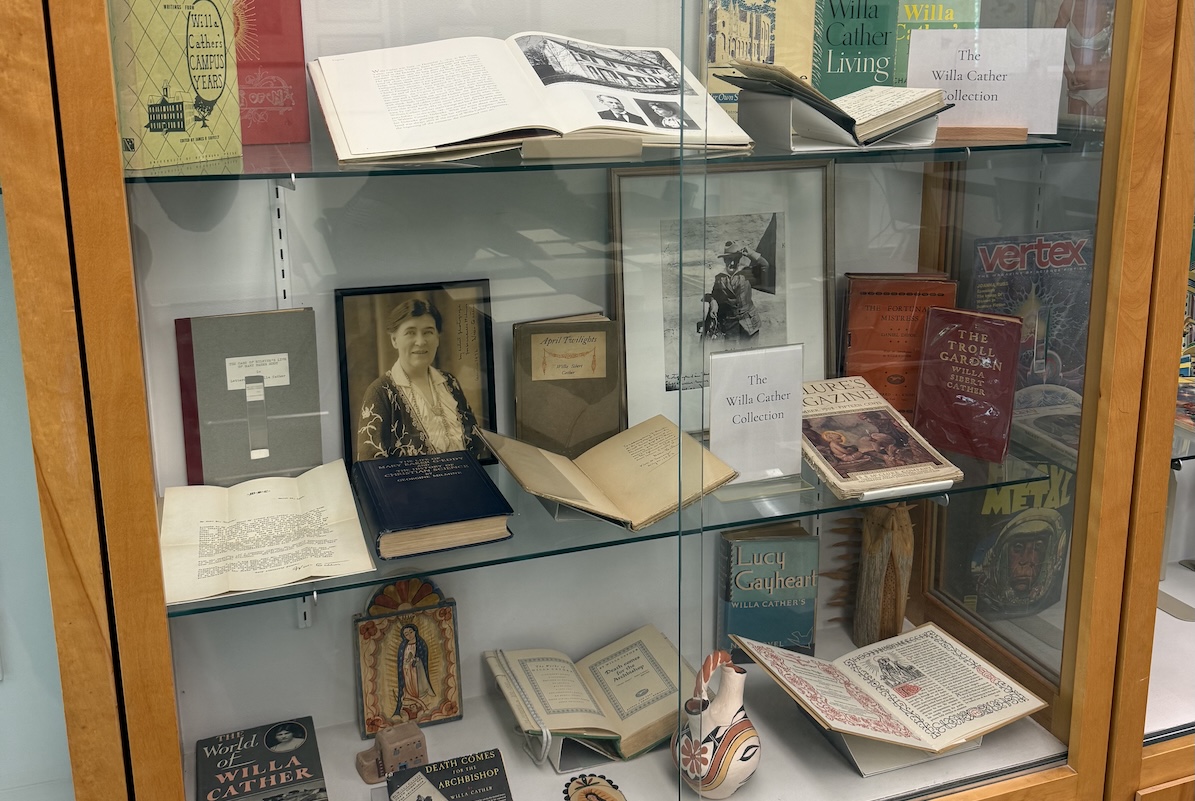
Drew’s Willa Cather Collection, now accessible through JSTOR Digital Stewardship, contains the personal library of the late Frederick B. Adams, former director of the Pierpont Morgan Library; the private collection of Earl and Achsah Brewster, who shared a long friendship with Cather; as well as the collections of Finn and Barbara Morris Caspersen and Yehudi Menuhin.
“Rarely do I get the opportunity to work with special collections and handle materials dating back to the late 1800s,” said special collections intern Olivia Boisnier, who spearheaded the project. “It was remarkable to learn not just about Willa Cather’s life but also her close friends. What is preserved today demonstrates the care and consideration people had for her.”
During the project, Boisnier carefully reviewed the collection—ranging from first editions to manuscripts written by Cather and her circle of friends. She digitized and added metadata to the entire collection, significantly expanding research opportunities for scholars worldwide. An exhibit case in the archives classroom space was curated, offering Drew students a chance to visually explore the Cather Collections on campus.
“The collection provides opportunities for interdisciplinary scholarship, community engagement, and bibliographic instruction,” Boisnier said. “Willa Cather’s collection is an example of the power of archives, not just to store the past, but to inspire new perspectives, learning, and preserving the legacy of an author who was not just private but widely influential.”
“One of the essential responsibilities we have is respecting authorial intent, following ethical access, and making sure that literary expressions continue to be part of today’s discussions and tomorrow’s discoveries,” said Boisnier, emphasizing the critical role of libraries in supporting this work.