Celebrating Drew’s trailblazers in honor of Women’s History Month
Enlarge
March 2026 – In celebration of Women’s History Month, Drew University is honoring some of the first women students who played pivotal roles in shaping its legacy—embarking on their educational journeys at Drew during an era when opportunities for women in higher education were limited.
From the earliest women admitted to Drew Theological School to the pioneering female students at Drew University (then called Brother’s College), these trailblazers broke barriers and opened doors for future generations to pursue higher education.
In 1915, Drew Theological School faculty voted to admit women “on the same condition as accorded to men.” This progressive decision stood out at a time when few higher education institutions welcomed female students.
Just three years later, in 1918, Ruth Havighurst became the first woman to enroll at the Theological School, marking a defining moment in Drew’s history. In 1921, Esther Turner Wellman earned her Bachelor of Divinity and became Drew’s first alumna, followed by Lila Mae Cooper who became the first woman to earn a Master of Arts in 1922.
Decades later, during World War II, many U.S. colleges began admitting women as male enrollment declined due to military service. Brother’s College, established in 1928 as an all-male institution, temporarily opened its doors to women.
Enlarge
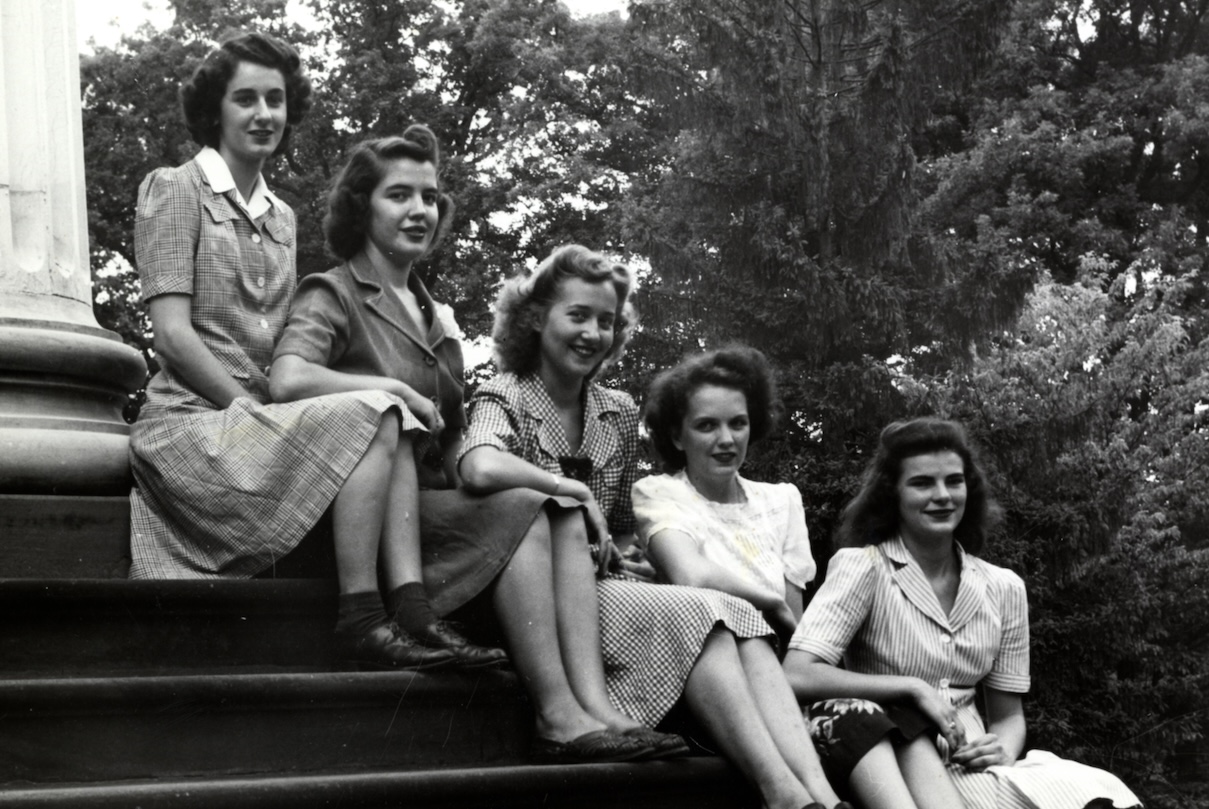
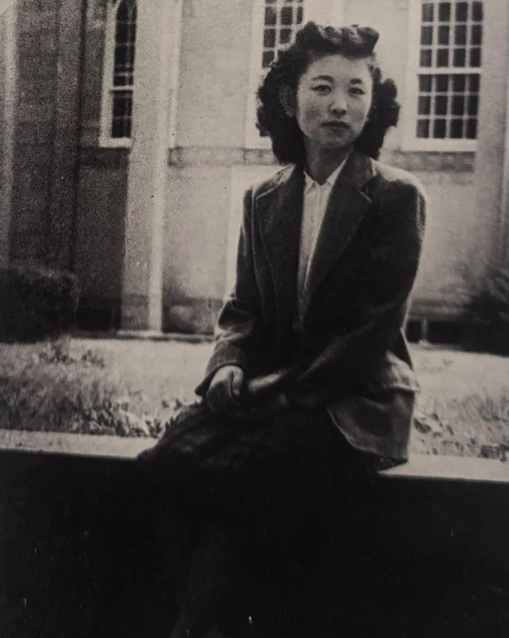
Nora Mielke became the first woman to enroll at Brothers College in February 1943. Soon after, Sayoko Nakata C’44 transferred to Drew to become the first woman to earn a Bachelor of Arts degree from the college.
“As women coming to Drew, we felt immediately that it was our school. We didn’t feel peripheral at all,” said Megan Simpson C’46, G’80 in the fall 1992 issue of the Drew Magazine. “Although we knew that the trustees had only initially opened Brothers College to women for the duration of the war. We felt our place was secure.”
The progression continued. In 1946, field hockey became Drew’s first women’s varsity sport. Just a year later, Drew’s Board of Trustees voted unanimously to keep Brother’s College open to women indefinitely.
In 1956, Maud Jensen T’43,’45, G’78 became the first woman to receive full clergy rights in the United Methodist Church. Ten years later, Drew’s Graduate School (now the Caspersen School of Graduate Studies) awarded its first PhD to a woman, Christine Rosenblatt Downing G’66.
These trailblazing women arrived at Drew during times of change and uncertainty. Through Drew’s progressive stance, they laid the foundation for women who would follow and continue to shape Drew’s vibrant community for generations to come.