Exploring apocalypse as unveiling, warning, and possibility
April 2026 – Drew Theological School convened scholars, alums, students, and faculty for the 21st annual Transdisciplinary Theological Colloquium (TTC), a three-day hybrid gathering that challenged participants to rethink the timely concept of the apocalypse.
Enlarge
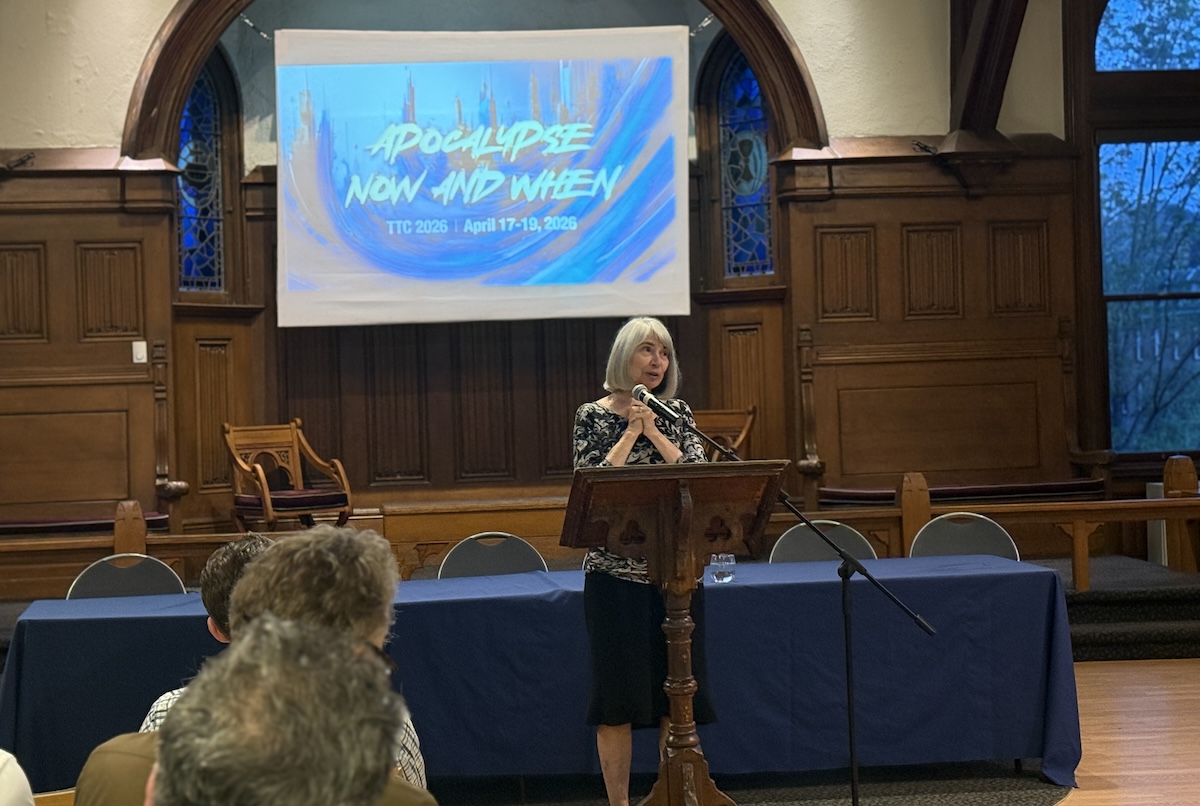
Framed by the theme “Apocalypse Now and When” and inspired by the work of Catherine Keller, George T. Cobb Professor of Constructive Theology, the colloquium explored the many histories and possibilities of apocalypse as it moves across disciplines, shaping both theological and secular.
Keller, who has long been instrumental in organizing the TTC, delivered the keynote address in what marked her final colloquium as a Drew professor.
“We engage a theme that is as timely as it is ancient, ‘Apocalypse Now and When,'” said Drew Theological School Dean Edwin David Aponte. “The root of apocalypse is not destruction, but unveiling. We need multiple unveilings as we face mounting threats in our planet’s life, even relationships and democratic institutions. This weekend offers an opportunity for all of us to move beyond the sensational and toward more responsible and generative uses of this metaphor.”
The event kicked off with a series of student panel presentations showcasing a wide range of doctoral scholarship and research. Participants included Beth Quick, Susan Chang Saridakis, Yajenlemla, Tyler Heston Wolf, Eun Sung Han, Bethany E. M. Davy, Bryant Burkhart, Lerato Pitso, and Fellipe dos Anjos Pereira. Their work sparked thoughtful dialogue with scholars, who engaged the panelists in discussion and inquiry.
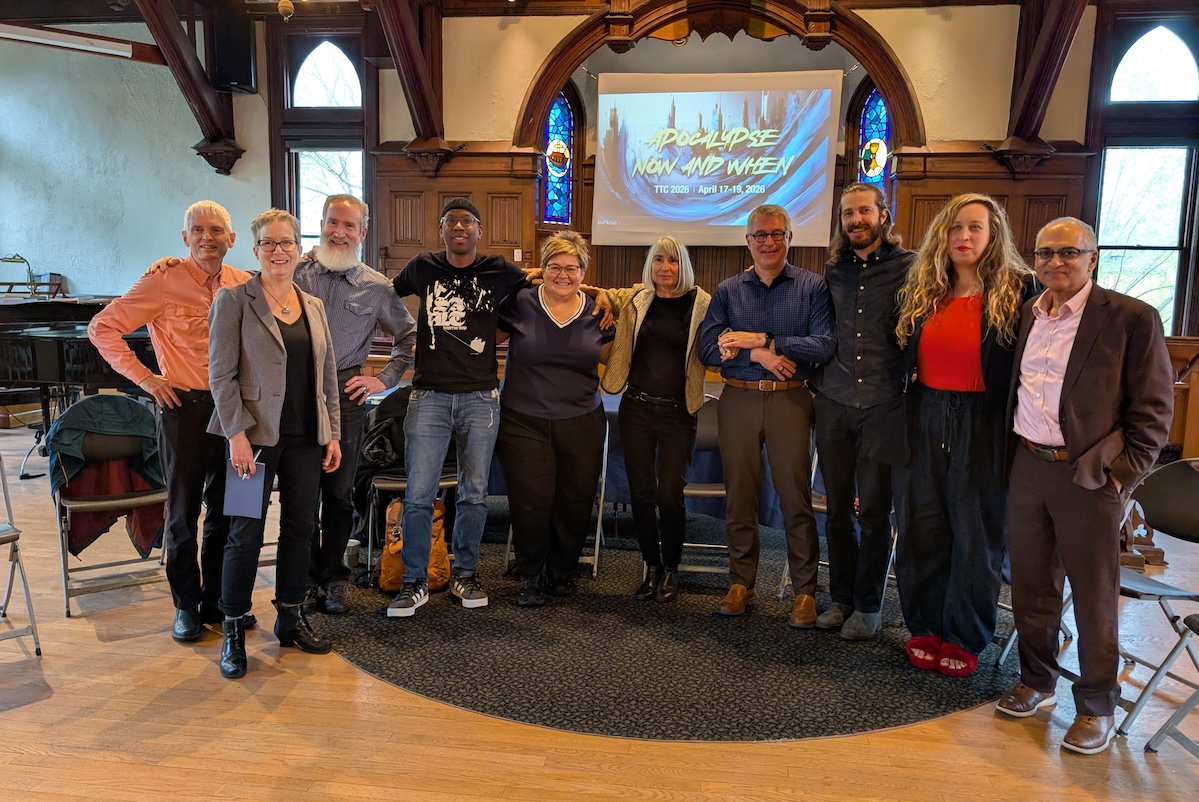
Associate Dean for Academic Affairs Robert Paul Seesengood, who organized the event in tandem with Drew’s Graduate Division of Religion PhD students, welcomed Keller and helped frame the discussion. “Dr. Keller has reminded us all again and again that apocalyptic is not change,” he said. “Apocalyptic is less about chaos versus order, and more about building an orderly unit of chaos. And chaos is a beautiful and imaginative concept. We dance, as Dr. Keller did, an apocalypse between despair and opportunity, between process and impermanence.”
Keller’s keynote address traced similarities between Revelation’s imagery and today’s environmental crises, including deforestation and water pollution. “The mourning of the earth’s wounds has spread pretty widely,” she said.
At the heart of Keller’s address was a reframing of hope. “Christians are neither optimists nor pessimists,” she said. “We are hopeful. Yet, hope has to be reinvented constantly. That’s the key to the perseverance. It’s not regulated by the predictability of a preordained future. Hope has to be improvised. Optimism believes it is embracing a sure future. Hope lacks the sense of guarantee and faces its present reality with all of its dangers.”
“Facing apocalypse does not mean facing doom,” she said. “But facing the worst in order to discern possibility.”
The following day’s faculty panels extended these conversations, examining apocalypse in contexts from biblical texts to contemporary, cultural, and political life. Seesengood responded and facilitated a Drew panel discussion surrounding the theme, “Apocalypse (Mostly) Where You Expect to Find It.” The panel featured Stephen D. Moore, Edmund S. Janes Professor of New Testament Studies, Melanie Johnson-DeBaufre, Henry Anson Buttz Professor of New Testament and Early Christianity, and O’neil van Horn T’17,’21, assistant professor of theology at Xavier University.
For a full listing of presenters and sessions, visit Drew’s TTC webpage.
Cutting-edge contributions from past years of the Transdisciplinary Theological Colloquium at Drew are available in a series of volumes published by Fordham University Press.