A Prayer in Three Acts by Richard Choi and The Landscape by Rick Mullin C’80 are on display now
February 2026 – Drew University’s Art Department is presenting two exhibits to start the spring semester.
Enlarge
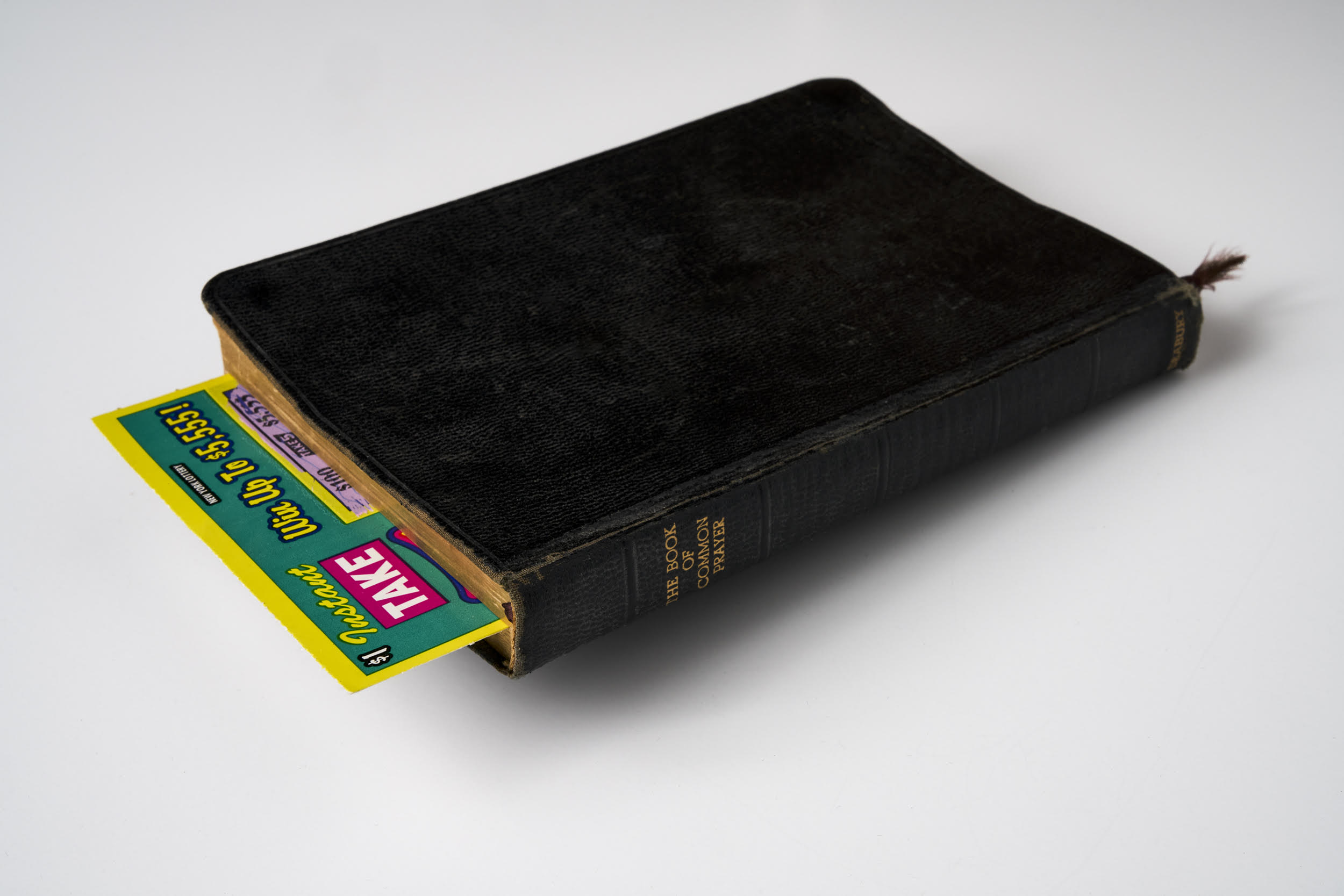
Artist-in-residence Richard Choi’s exhibit A Prayer in Three Acts explores the ways in which faith manifests in daily life.
The exhibit, curated by Rory Mulligan, assistant professor of art, and Rebecca Soderholm, professor and chair of art, includes still photography, video, and mixed media instillations which will actively evolve throughout the duration of the exhibition.
A Prayer in Three Acts is on view at the Korn Gallery in the Dorothy Young Center for the Arts through March 6. The gallery is open Tuesday through Friday from 12-4 p.m., and by appointment.
A second exhibit features the work of Drew alum Rich Mullin C’80.
Enlarge
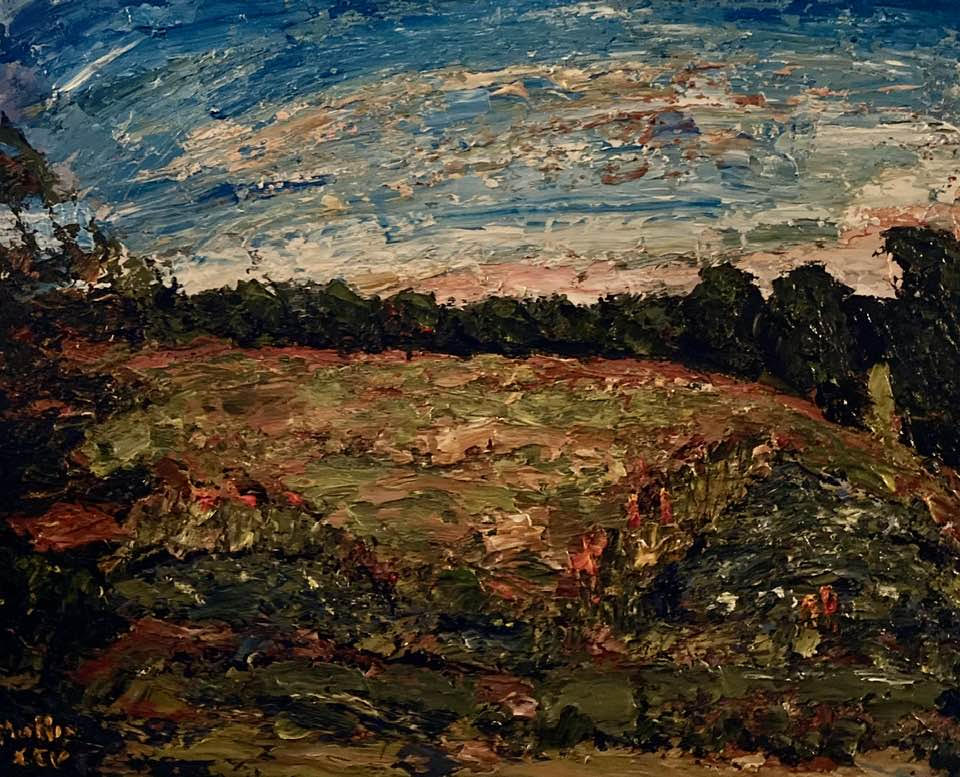
Mullin’s The Landscape is comprised of a series of impasto oil and acrylic paintings focused on specific sites in the landscape, primarily made from direct observations. The exhibit includes 14 works created with thick oil and acrylic pant on canvas and panel.
The Landscape, organized by Jason Karolak, associate teaching professor or art, is on view through March 6 in Mead Hall, open Monday through Friday from 9 a.m.-5 p.m. An artist talk and reception will take place February 9 from 4-6 p.m. in Mead Hall.
More information on the two artists and exhibits can be found below.
About Richard Choi:
Born in Los Angeles, California, Richard Choi is an artist living and working in Yonkers, NY. His work has been exhibited nationally and internationally including exhibitions at the International Center of Photography in New York, NY, and the Les Recontres d’Arles Photography Festival in Arles, France. His video piece, Trampoline, was the subject of Alexander Nemerov’s essay titled The Hushed Place: Richard Choi’s Trampoline published by Terra Foundation in Volume 4 of their Terra Foundation Essay series of books. He holds a BFA from Art Center College of Design and an MFA from Yale University.
About A Prayer in Three Acts:
A Prayer in Three Acts is a dynamic exhibition by Richard Choi that explores the ways in which faith manifests in daily life. The exhibition begins with a selection of photographs and videos from a body of work titled What Remains and will quietly shift, without announcement, over the course of his residency at Drew University.
What Remains presents a series of short videos replaying everyday moments in American lives: a man lays on his bed playing a recorder and stroking his cat; a mother prays with her children; a lady sketches her daughter across a dining table; a woman winds a clock in a room full of them. The videos are casual, handheld and naturalistic, maintaining the authenticity of the encounter, but as we enjoy the flow of time, there is a sudden stutter accompanied by the sound of a camera shutter, and a single photograph is made, freezing life for a fraction of a second to extract a single image, before the world resumes its motion.
The role of chance recurs in the rotating exhibitions in Three Acts. From the chance encounters with strangers that Choi finds in public, which extend into their private realms, to the moment he disrupts the flow of time the video embodies by freezing the image in stillness, the role of chance in photography is on full display in this body of work. Engaging with the world without control is intrinsic to the nature of Choi’s form of documentary photography. It requires the artist and those in his images to remain open to chance and human connection. As Toni Morrison has written:
“I was longing for and missing some aspect of myself, and that there are no strangers. There are only versions of ourselves, many of which we have not embraced, most of which we wish to protect ourselves from. For the stranger is not foreign, she is random; not alien but remembered; and it is the randomness of the encounter with our already known—although unacknowledged –selves that summons a ripple of alarm.”
This theme continues in the latter two rotations of this exhibition. While the artist wishes for the content of these iterations to remain unknown, the exhibition will continue to reveal how Choi plumbs the ways in which many of us seek hope and dreams in the external world. Throughout these rotations a kind of prayer becomes visible among maker and subjects. The artist seeks out manifestations of his ideas by sifting through the ever moving current of strangers and time, seeking something unknown but firmly held. Those on the other side of Choi’s camera, and unseen in further installations, uncover a distinctly American vision of prayer: leaning into chance, hoping fortune will reward their faith–just as the artist places his faith in strangers and their dreams.
About Rick Mullin:
Rick Mullin was born in Morristown, NJ, and graduated from Drew University with a major in English Literature. In his mid 30s he began to make paintings, inspired by an exhibition of Fauve landscapes that he saw at the Los Angeles County Museum of Art in 1990. Though primarily self-taught, Mullin studied in the night classes of Ernest Crichlow and Hananiah Harrari at the Art Students League of New York, and was also mentored by Paul Weingarten. Mullin’s paintings have been selected for several juried exhibitions over the years, including one at the Salmagundi Club in New York City. He is a member of Viridian Artists, the oldest co-op gallery in the city. His work is in private collections in the U.S., Canada, Europe, and Australia. His influences include Cezanne, Courbet, Corot, Ryder, Blakelock, Soutine, Rouault, Modersohn-Becker, Bonnard, and Beckmann. Mullin is also a poet with nine published volumes, including “Soutine”, a biographical novel in verse about the painter Chaim Soutine.
About The Landscape:
The exhibition in Mead Hall includes 14 works created with thick oil and acrylic paint on canvas and panel, with an emphasis on the landscape. Many of the works were painted directly on site, or from studies and drawings made from observation. The settings for the paintings are specific locations that Mullin returns to again and again, and with which he feels a visceral connection. Though representational to each location, the paintings veer toward the abstract and romantic, luxuriating in bold mark-making and rich color. Impasto surfaces draw us in to the earthly qualities that have been witnessed in these places, while transporting us to higher, emotional states. The paintings suggest a process that is responsive and intuitive. Mullin states, “My approach is difficult to describe, but I find that George Inness’s observation that knowledge must bow to spirit is essential to landscape painting. It has become something of a mantra to me as I work.”