“This program was both academically rigorous and deeply human”
February 2026 – As Chief Community Health and Social Impact Officer for Duke University Health System, Ian Lee Brown G’25,’26 leads enterprise-wide strategies for community health, social impact, and cross-sector partnerships that advance care that is accessible, responsive, and grounded in community needs, population health, and whole-person care.
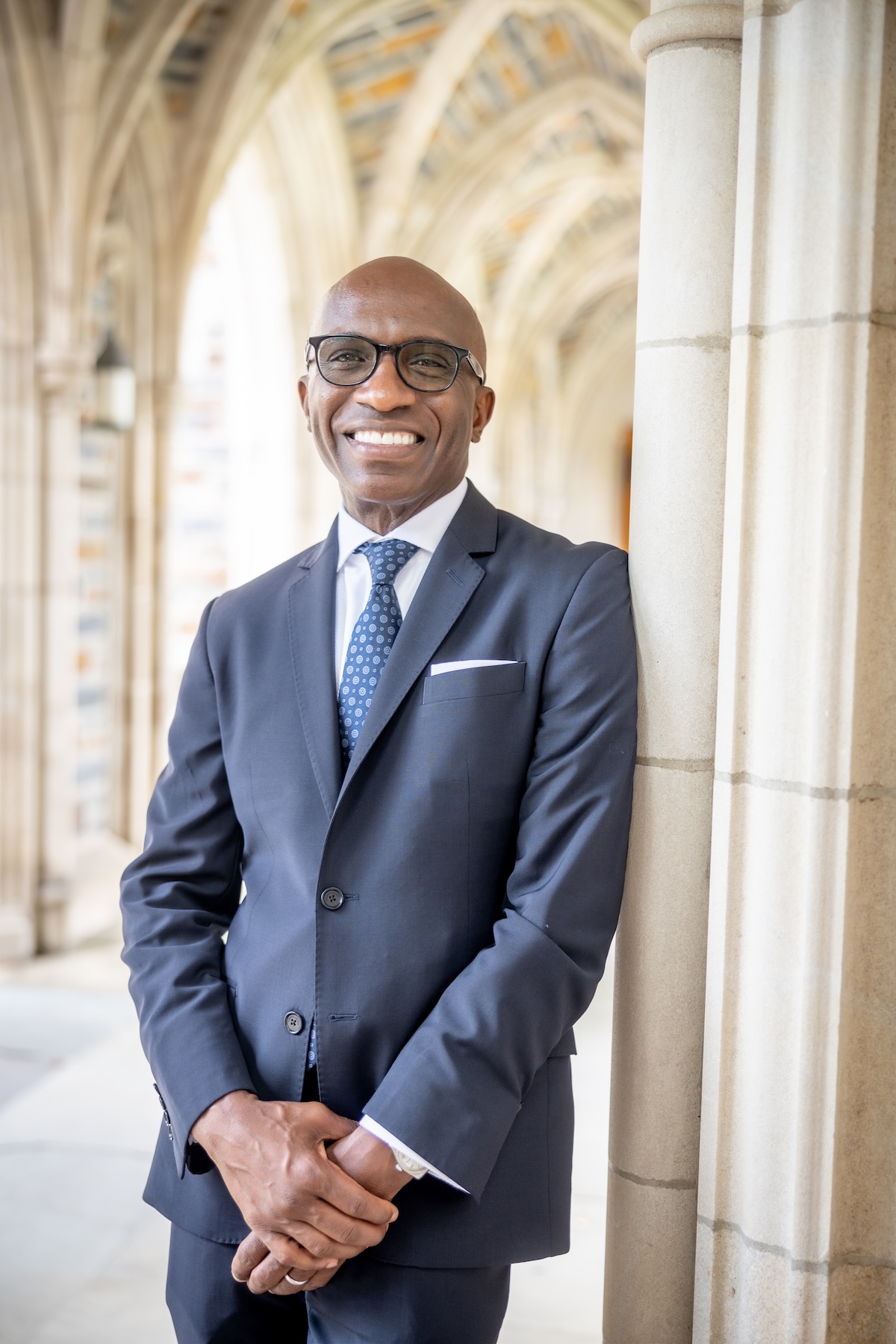
The desire to integrate humanity, belonging, and ethical response to inform his leadership led Brown to pursue a Doctor of Medical & Health Humanities through Drew University’s Medical & Health Humanities program.
“This program was both academically rigorous and deeply human,” said Brown. “It gave me language, structure, and courage to bridge the street and the academy, survival and scholarship, leadership, and love. Completing this doctorate felt less like an endpoint and more like a reclamation–of voice, belonging, and purpose.”
Brown recently successfully defended his dissertation with distinction, “From Struggle to Belonging: A Journey of Resilience, Forgiveness, and Love With Deep Insights Into the Power of Authentic Leadership in Health Care,” which explores the transformative potential of authentic leadership grounded in lived experiences of marginalization. “Using critical autoethnography and narrative methodology, I examine how personal narrative can function as both method and theory within health care leadership,” he said of his work.
Brown, who also earned a Contemplative Professional certificate from Drew, reflects on why he chose Drew and how the program shapes his work in health care and leadership. Read on to learn more.
Why did you choose Drew’s Medical & Health Humanities program?
I chose Drew’s Medical & Health Humanities program because it created rare intellectual space for lived experience, ethics, and narrative to stand at the center of scholarly inquiry. I was seeking a program that did not require me to fragment my identity as a Black, gay, formerly undocumented, and unhoused immigrant from my professional life in health care leadership. Drew allowed me to bring my whole self—history, struggle, faith, and questions—into rigorous academic conversation.
The program’s grounding in humanities, social justice, and moral reflection aligned deeply with my desire to examine leadership not merely as function or authority, but as a relational and ethical practice shaped by belonging, exclusion, and care. Drew affirmed that storytelling is not ancillary to knowledge but a legitimate and necessary method for understanding power, healing, and institutional change. That affirmation made it the right intellectual and spiritual home for my work.
How will you apply the learnings from the program to your role in health care?
The program sharpened my capacity to lead with authenticity, ethical clarity, and narrative intelligence. I apply these learnings by centering lived experience—of patients, caregivers, and communities—as essential data that informs strategy, culture, and policy. The humanities lens enables me to challenge hierarchical leadership models that distance decision-makers from human consequence.
In practice, this means advancing health equity and employee experience work that prioritizes belonging, trust, and relational accountability. I draw on narrative as both a diagnostic and transformational tool—helping organizations surface hidden harms, honor resilience, and reimagine systems through more humane and justice-oriented frameworks. The program strengthened my ability to translate moral insight into institutional action, bridging theory and practice in meaningful ways.
What inspired your dissertation topic?
The work was inspired by my own journey–from migration and homelessness to executive leadership—and by the persistent disconnect I observed between leadership theory and the lived realities of those most impacted by health systems. What surprised me most was how consistently vulnerability emerged not as weakness, but as a source of trust, moral authority, and institutional credibility. Authentic leadership, I found, is not aspirational–it is a necessary intervention in systems marked by inequity.
Robustly interdisciplinary, Drew’s Medical & Health Humanities program encourages explorations of how health and medicine, with care at their center, are constructed, experienced, and practiced—socially, historically, ethically, politically, legally, and organizationally—recognizing that health problems are shaped by forces extending far beyond the clinical encounter. The program is committed to ‘involved’ learning, diversity, and inclusivity and can be completed in a full- or part-time basis. Designed with working professionals in mind, courses are offered in the late afternoon and early evening and allow for online, synchronous learning, making Drew an excellent choice for distance-based students.