The veteran writer and educator earned her Doctor of Medical & Health Humanities
February 2026 – For more than 25 years, Laura McCullough-Thoms G’26 has worked at the intersection of language, education, and transformation.
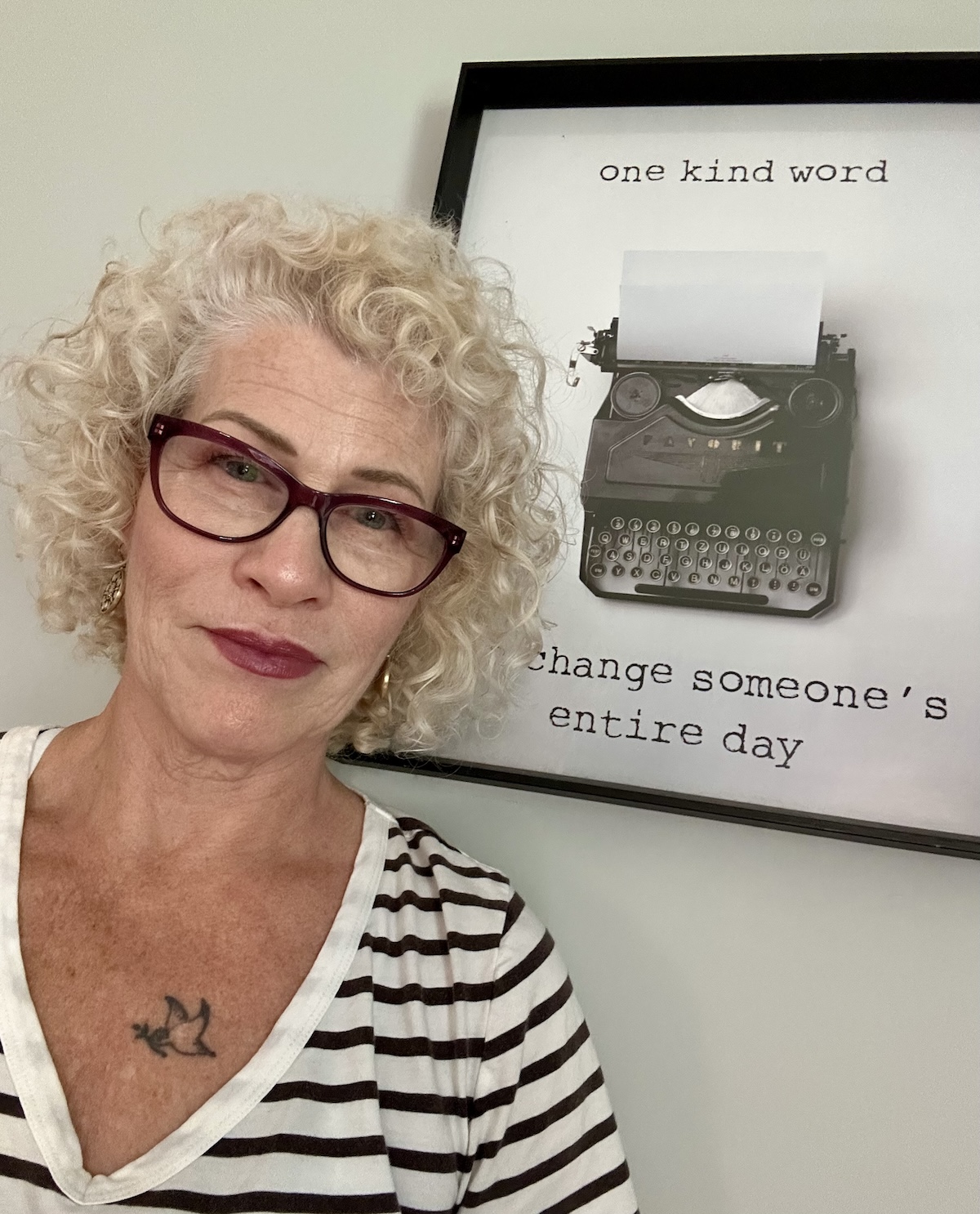
A Professor of English at Brookdale Community College who has also taught at Stockton University and Ramapo College, McCullough-Thoms’ teaching spans writing, research, critical theory, and creative writing, focusing on self-discovery through language. She has authored numerous books and publications in both poetry and transformative practices focusing on emotional literacy, narrative theory, conflict transformation, and trauma awareness. Her eighth book of poetry is forthcoming from Cornerstone Press, and her book Teaching Writing Through Information & Media Literacy is forthcoming from Bloomsbury Press.
Her research, focused on care ethics and inherited trauma, ultimately led her to Drew University’s Doctor of Medical & Health Humanities (DMH) program. She was seeking a program that allowed her to meld her work as a writer and educator developing emotional literacy and trauma‑informed practices for college students.
“When I talk to others about the program, I tell them I felt seen and respected by the faculty, that they were open to the experiences that adult learners bring to the classroom, but that I also felt challenged to grow, deepen my knowledge, and to make connections that I couldn’t have made without the program,” said McCullough-Thoms. “It really was a life‑changing experience. The discovery process, coupled with rigor but handled with nurturance, was stellar.”
“At Drew, the idea of ‘community’ is really an intellectually diverse one while also being compassionate and supportive.”
Read on to learn more about McCullough-Thoms’ journey to and through Drew and the impact it has on her writing and teaching.
Why did you choose Drew’s Medical & Health Humanities program?
The medical and health humanities is an interdisciplinary, almost hybrid field that has been gaining momentum and interest around the country for the last 15 or 20 years, and Drew’s program, under the leadership of Merel Visse [Program Director], is particularly innovative and even daring. I came to the program because I could see the opportunity for bringing together two portions of my professional life—my work in the literary field as a publishing writer as well as an editor, and my work as an educator developing emotional literacy and trauma‑informed practices for college students.
Honestly, I thought the program fit me, but I also thought that I knew enough already—that I would go through the program, get the degree, and move on. But what I learned was so much more than I ever expected, both in terms of the discipline’s foundational ideas, and also in the flexibility at Drew for working across programs, so that you might find yourself taking classes from one graduate program while you’re in another, which simply enhances the richness of the whole experience and exposes you to faculty and fellow students you might not have met otherwise. I took a number of classes on the literature side of the house that connected with and enhanced the work I was doing in the DMH program.
How have your learnings enriched your writing and teaching?
As an educator, I was reminded what it is like to be a student, and many of the concepts I learned reinvigorated my own teaching practices. And as an author, I’ve now moved into speaking and writing in ways that encapsulate what my dissertation ultimately landed on, which is this tagline I share: Trauma needs story to metabolize.
Tell us about your dissertation.
What I was able to do in my dissertation was marry my study of epigenetics, inherited and intergenerational trauma, emotional literacy, and relational health, with narrative theory and the importance of the humanities. How does story—the process of storification as well as our engagement with other people’s stories—help with healing on the personal, familial, and communal level? Where do ethics come into play in our lives and in social and cultural healing? How do the arts in general lend dignity, meaning, and health to individuals and groups? How do we transmute human suffering and grief and develop compassion? How do we inoculate against the all too human drains of caregiver burnout or dehumanization?
In the Medical & Health Humanities program, these kinds of cross disciplinary questions could be explored, and my scholarship in these areas informed a creative manifestation of the practices I studied. Being able to do both intellectual and creative work within the same program was amazing. The title is a mouthful: The Coordinates of Being: Compassionate Curiosity, Apophatic Storytelling, Relationality, and the Healing Imagination.
________________________________________________________________________________________________________________________________
Robustly interdisciplinary, Drew’s Medical & Health Humanities program encourages explorations of how health and medicine, with care at their center, are constructed, experienced, and practiced—socially, historically, ethically, politically, legally, and organizationally—with the understanding that health problems are shaped by forces extending far beyond the clinical or classroom encounter. The program is committed to ‘involved’ learning, diversity, and inclusivity and can be completed on a full- or part-time basis. Designed with working professionals in mind, courses are offered in the late afternoon and early evening and allow for online, synchronous learning, making Drew an excellent choice for distance-based students.