

What is Civic Engagement?
Civic engagement is the commitment to participate in and contribute to formal and informal social, legal, and administrative processes for positive social impact. Positively impacting social inequities is achieved through collective critical dialogue, deliberation, problem solving, decision making, and informed action to address and positively impact social inequities.
CCE Mission
The Center for Civic Engagement bridges scholarship and action by providing immersive, experiential learning opportunities, and holistic leadership skills development, innovative practice and social justice frameworks. Our students gain a holistic understanding of community needs while advocating and leading change for positive societal outcomes.
Our Values
OUR VALUES:
Reflection: Civic engagement encourages individuals to examine the connections between self and others with the life/condition of their communities through mindfulness, personal stories, practical experiences, historical and cultural context, and the relationship to political, economic, environmental, and social impact.
Respect: Civic engagement cannot thrive without honoring the great value and worth of our world, nature, and all its inhabitants. We show honor through our commitment to the practice of humanity, integrity, and trust as the foundation of respect for all.
Reciprocity: Civic engagement is reciprocal as it cultivates access to mutually beneficial resources and relationships that address and positively impact social inequities, informed by the needs and goals of all participants.
Responsibility: Civic responsibility is the commitment to the process of participating and contributing to the work of collaborating, problem solving, organizing, strategizing, and decision making to achieve specific goals identified by community/public input that inform strategy and action to address and positively impact social inequities.
Impact: The CCE’s commitment to civic engagement drives our intentional collaboration with partners and a spectrum of projects and initiatives to cultivate reciprocal benefits that make a positive difference in the lives and well-being of all participants. Civic engagement must be constituent-led to positively impact social inequities.
National and Regional Partners
The Center for Civic Engagement supports teaching, research, scholarship, art, and other university-based activities that benefit communities. Working collaboratively with community organizations and other institutions, we develop sustainable partnerships that can help both Drew and its partners meet their goals. In keeping with this priority, the Center has developed some key partnerships with the potential to achieve significant gains in addressing community needs and building community assets.
NEW JERSEY CAMPUS COMPACT
 New Jersey has joined 33 other states in forming a state affiliate of Campus Compact, a national organization dedicated to furthering the civic mission of higher education. The presidents and chancellors of 17 NJ colleges and universities have joined the new organization, New Jersey Campus Compact (NJCC), which seeks to have a demonstrable impact on pressing issues facing the state and its communities.
The NJ Campus Compact member institutions include Bergen Community College, Berkeley College, Brookdale Community College, Drew University, Fairleigh Dickinson University, Georgian Court University, Monmouth University, Montclair State University, New Jersey City University, Princeton University, Ramapo College, Raritan Valley Community College, Richard Stockton College, Rutgers-Newark, Union County College, University of Medicine and Dentistry and William Paterson University.
PROJECT PERICLES
 Drew University is honored to be a member of Project Pericles, a consortium of 30 colleges and universities committed to incorporating civic engagement into their core educational mission. Project Pericles is a not-for-profit organization that encourages and facilitates commitments by colleges and universities to include education for social responsibility and participatory citizenship as an essential part of their educational programs, in the classroom, on the campus, and in the community.
This learning experience is intended to provide students with a foundation for social and civic involvement and a conviction that democratic institutions and processes offer each person the best opportunity to improve the condition of society.
CARNEGIE FOUNDATION COMMUNITY ENGAGEMENT CLASSIFICATION
 Drew University’s deep commitment to civic and community engagement has been recognized by the Carnegie Foundation for the Advancement of Teaching, which listed Drew among 240 colleges and universities to receive its coveted Community Engagement Classification in 2015. The classification follows a rigorous process that involved a 60-page application listing not only the ways Drew students in all three colleges and faculty and staff engage with the outside world, but also the ways that the university has built bridges with the borough of Madison, non-profit organizations, and other communities.
Latest News

Drew University Junior Receives Fellowship for Civic Engagement
“It makes me feel like my work is being seen and appreciated,” said Chekwube Okunowo C’24
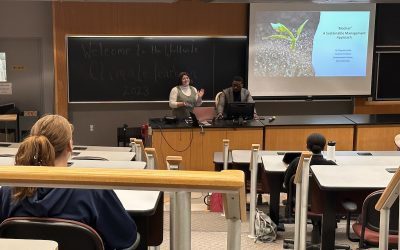
Drew University Holds Worldwide Climate Teach-In
Strengthening Community Environmental Partnerships

Drew’s Center for Civic Engagement Hosts Empowerment and Student Leadership Panel Discussion
Students reflect on gender empowerment in honor of Women’s History Month

Drew University Students Launch Their Majors
Eden Linton C’24 provides a student view of the student-centered event guiding students to make major choices

Drew University Welcomes Ruha Benjamin
The author, professor, visits with students, talks racial justice with the community

Drew University Students Help Rebuild the Lower Ninth Ward
Volunteers Without Borders lends a hand to the New Orleans district