

Online
Hybrid
Full Time
Part Time
MA 30
DMH 45
$1,510
Fall
Spring
Summer
Program Requirements
Certificate in Medical Humanities (15 credits)
Requires the completion of five courses. Four of the courses (Medical and Health Humanities Seminar, Medical Humanities Practicum, Biomedical Ethics, and Introduction to Narrative Medicine) are mandatory. The remaining course may be taken as an elective.
Master of Arts in Medical Humanities, Health & Society (30 credits)
Requires the completion of nine courses plus thesis, or if on the non-thesis track, a total of eleven courses. Five courses are required. The remaining courses are taken as seminar electives.
Doctor of Medical & Health Humanities (45 credits)
Requires the completion of twelve courses. Seven courses are required. The remaining five courses are taken as seminar electives. All Doctor of Medical and Health Humanities students must prepare and successfully defend a nine-credit doctoral dissertation of 150-220 pages.
Flexible, Low-Residency Program
Our unique low-residency program, accredited by Middle States, consists of on-campus and fully online course options, allowing a diverse group of students to be on our Madison campus once or twice a year, and attend all coursework remotely via video conference during synchronous sessions, fostering a sense of exchange, learning, and community.
Our program is committed to diversity and inclusivity and can be completed on a full- or part-time basis, providing flexibility to accommodate your schedule. Designed with working professionals in mind, courses are offered in the late afternoon and early evening. Our courses allow for online, synchronous learning, making Drew an excellent choice for distance-based students.
Addressing Today’s Urgent Concerns
There is an ever-growing demand for professionals who understand the ethical, political, historical, cultural, and practical aspects of care practices and who can influence the debate on good medicine and care in society, to ultimately foster a caring society. Drew’s program in Medical and Health Humanities engages today’s urgent concerns, such as
- the quality and experience of care in consulting rooms, hospital wards, residential care facilities, and local homes.
- the relationship between health care as scientific knowledge and evidence-based medicine and the intangible needs and qualitative experience of professionals, patients and their families.
- the contributions of the creative arts, ethical theory, and socio-political analysis to humanizing medicine and increasing wellbeing and healing for the individual and society.
Program Partners
The Medical & Health Humanities program is conducted in partnership with Atlantic Health Systems and one of New Jersey’s top hospitals, Morristown Medical Center. In addition we have partnerships with a vast number of educational programs and health care institutions both locally and internationally. This results in opportunities to assist you in developing your internship or practicum at hospitals and non-profits—always tailored to your professional goals—to be completed in your local area. Our University library and research support are always available to Drew students no matter where they live. You can work with Drew’s national and internationally renowned faculty through unique courses and independent study, while receiving personalized support to reach your educational goals.
DMH Resources
Latest News
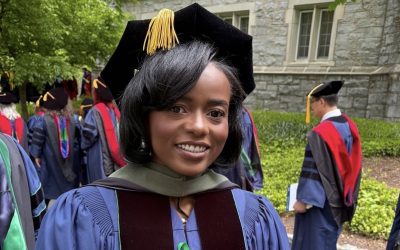
Drew Theological School Graduate Returns to Drew For Second Graduate Degree
“Drew gave me room to grow in more than one direction,” said Lydie Ngoie T’21, G’26
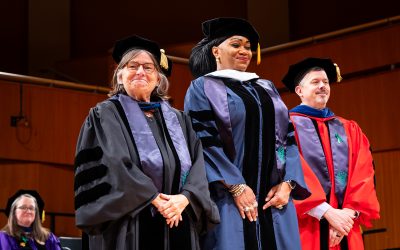
Doctoral Graduates Honored During Drew University Hooding Ceremony
Celebrating scholarship, vocation, and the completion of doctoral study
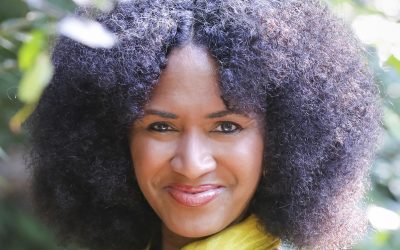
Two-time Alum Sharon Kimberly Williams T’19, G’22 Publishes First Book
Earning a Master of Arts in Theology & Ministry and a Doctor of Letters from Drew
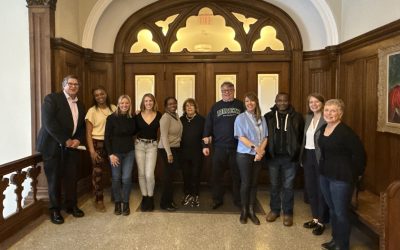
Living Between the Lines: On Involved Knowing in the Health & Medical Humanities Spring Colloquium
Showcasing student and alum research and projects
How Language and Healing Brought Laura Mccullough-Thoms G’26 to Drew University’s Medical & Health Humanities Program
The veteran writer and educator earned her Doctor of Medical & Health Humanities
How Duke Health Executive Ian Lee Brown G’25,’26 Put His Medical & Health Humanities Degree Into Practice
“This program was both academically rigorous and deeply human”